Economic empowerment of women has long been considered a key component in structural interventions
to reduce gender inequality, make women financially autonomous and reduce Gender-Based Violence
(GBV).
In Pakistan, most of the women residents of government managed shelters, and female
inmates of prisons belong to the lower socioeconomic groups , which places them in an already
marginalized position to start off and further exacerbates the barriers to their economic and social
reintegration once they leave these institutions. Many of these women are accompanied by children
who have additional needs, and they are largely dependent on their immediate family or husband/
in-laws for economic resources and even bare essentials. Once they leave, patriarchal family
structures and societal norms fail to provide them with a conducive environment to live independent
lives where they can make decisions in their own interest. These barriers to living a life of
independence and dignity result in a high rate of return to abusive partners or households,
perpetuating the cycles of violence and crime.
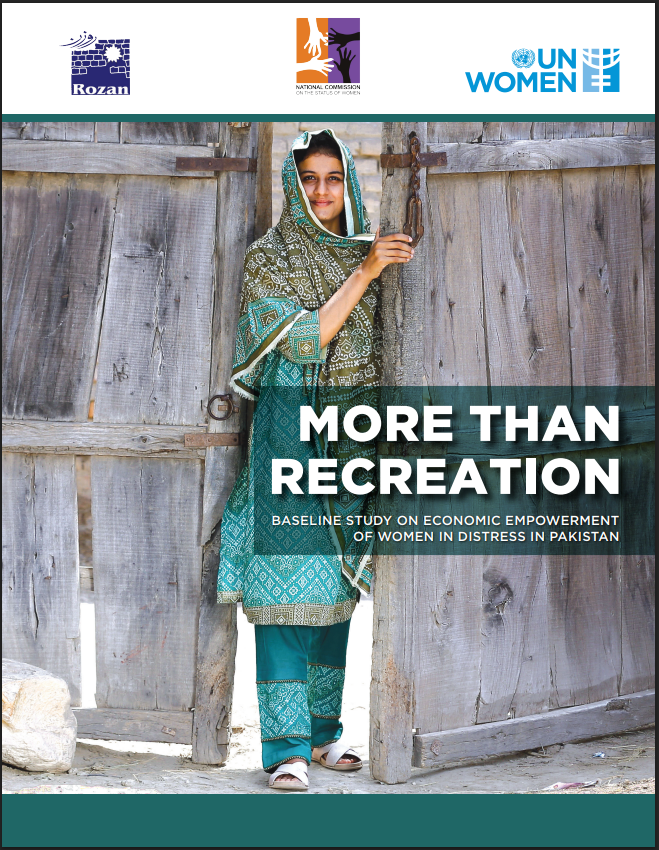
This study is designed to assess needs of women in
distress living in shelters or prisons to inform policy and programmatic actions on the
rehabilitation plans for such women and corresponding allocation resources.
| Publication Date | 2024-03-01 |
|---|---|
| Author(s) | National Commission on the Status of Women, UN Women |